Some animals remain condemned to the shadows, even when their role in the balance of ecosystems is beyond doubt. Major conservation efforts favor star animals, while a whole cohort deemed undesirable or mundane is systematically relegated to the background.
This sorting extends even into school textbooks, awareness posters, or scientific projects. Wildlife is judged against arbitrary criteria, such as beauty or utility, and those that do not meet these standards are excluded without further ado.
Unloved Animals: Reflections of Our Prejudices and Indicators of Our Relationship with Nature
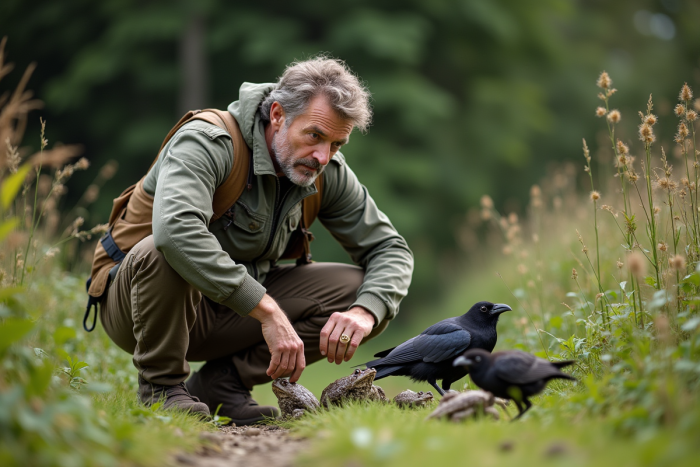
The rejection or indifference faced by certain animals is not random. Our view of the animal world is slowly constructed, fueled by beliefs, transmitted stories, or our collective habits. The donkey, an easy target for mocking tales, the wolf, a figure of fear in European imagination: each sidelined species tells a part of the fracture between humans and nature. As Pierre Jouventin, ecologist and research director at CNRS, points out, the animal deemed “failed” is often the one that does not serve a purpose, that disturbs, or that scares.
This logic even seeps into the daily management of species. Zoos and aquariums focus on the stars, casting into the shadows those that do not draw crowds. However, advocating for animal welfare should not be limited to photogenic mascots. A change is emerging in some zoological reserves, in France and elsewhere in Europe: they are committed to showing that every species, remarkable or discreet, contributes to the richness of wildlife.
Stereotypes are expressed to the point of caricature with the famous ugly fish, this blobfish whose appearance intrigues and repulses at the same time. Yet, as the article “The Ugliest Fish: Adaptation and Survival of the Blobfish – Blog Animaux” reminds us, this creature is a masterpiece of adaptation in the wild. Its supposed ugliness only reflects our own aesthetic codes, unrelated to its place in the living world.
Restoring existence to these disparaged animals also questions the anthropocentrism that guides our choices and representations. Human sciences, ecology, ethology: these are disciplines that work to deconstruct hierarchies and remind us that every species, from horse to elephant, from dromedary to donkey, transforms its environment and shapes the world to which we belong, whether we acknowledge it or not.
How to Rehabilitate These Species to Better Protect Biodiversity and Rethink Our Place in the Living World?
Changing the fate of unloved animals does not rely solely on beautiful words. Responsible tourism practices and eco-friendly travel are transforming the way we view wildlife, without limiting ourselves to the stars of the animal kingdom. Taking the train or bus, choosing slow travel, means opting for modes of transport that respect territories and reduce pressure on environments. This way of traveling, in stark contrast to animal exploitation or mass tourism, supports the local economy and fosters new connections with the living world.
Choosing accommodation with locals or in family-run hotels encourages the sharing of knowledge and openness to often-ignored species. Visiting markets, supporting small businesses, favoring products from organic farming or eco-friendly everyday items (reusable water bottles, cotton bags, solid soap): these are all actions that reinvent coexistence with wildlife, far from the logic of rejection or standardization.
Several concrete practices are essential to limit our impact and better respect biodiversity:
- Implementing selective sorting and reducing waste through simple actions like using doggy bags, kraft bags, or buying in bulk also protects natural habitats.
- Walking or cycling reconsiders human presence in the landscape and teaches us to observe without seeking to dominate.
Rehabilitating depreciated species also transforms our daily lives: consuming less, better, and rethinking our relationship with others, whether animal or human. This evolution, driven by fair tourism, solidarity tourism, or local economy, disrupts the hierarchy among living beings. We can then glimpse a horizon where sharing the world becomes more balanced, less dictated by our sole preferences. And what if, tomorrow, curiosity finally triumphed over contempt?