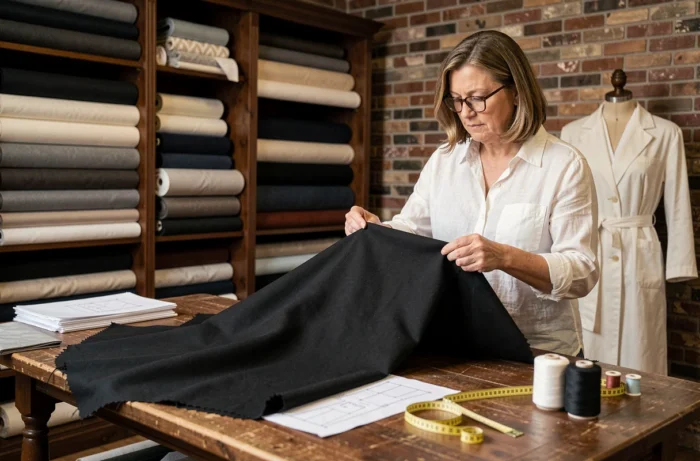
The lawyer’s robe is not just any garment. Its cut, codified by tradition, leaves little room for variation in shape. The fabric, however, remains the main lever of differentiation between a robe that fits well from the first hearing and one that loses its appeal after a few months of intensive use. Two main families of fibers dominate the market: wool and microfiber. Each meets distinct requirements for comfort, maintenance, and appearance.
Thermal comfort in court: merino wool vs. microfiber
The courtrooms present very variable thermal conditions depending on the seasons and the courts. The fabric of the robe directly influences the comfort experienced during hours of pleading or waiting.
Merino wool regulates body temperature better and absorbs moisture. It is particularly suitable for winter hearings or poorly ventilated rooms. Microfiber retains less heat, which can be a significant advantage during summer hearings.
This factor is rarely mentioned when purchasing, yet it determines daily comfort. A lawyer pleading for several hours in an overheated room will not have the same experience depending on whether their robe is made of thick wool or lightweight microfiber. To delve deeper into the question of which fabric to use according to Paris Tribu, the two materials are compared on several concrete criteria.
Black color retention and aging of the lawyer’s robe fabric
Black is the mandated color of the lawyer’s robe. Its depth and consistency over time constitute a selection criterion that is often underestimated at the time of purchase.
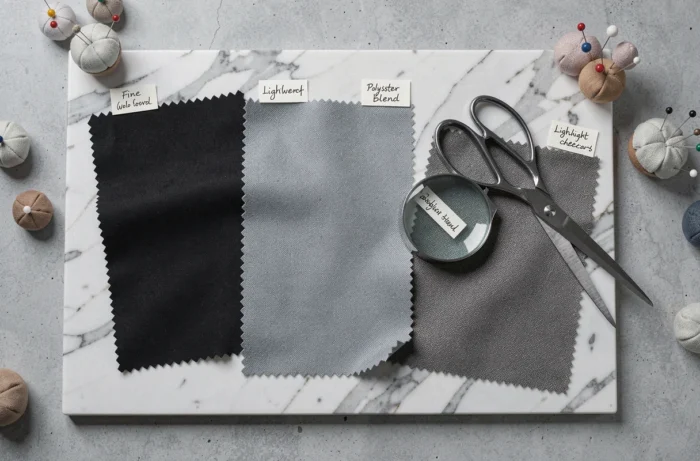
According to field feedback reported by the site Petits Pas, the black of microfiber can become dull or slightly grayish after several washes. Well-maintained wool retains a deep and dense black for longer. This difference does not appear at the time of purchase but becomes visible after a few months of regular use.
Field feedback varies on this point depending on the exact quality of the microfiber used. Not all microfibers age the same way, and some high-end synthetic fabrics resist fading better than others. The quality of the initial dyeing is as important as the fiber itself.
Maintenance and cleaning frequency
Wool generally requires dry cleaning, which is more expensive and less frequent. Microfiber is easier to wash, sometimes machine washable at low temperatures according to the manufacturer’s recommendations. For a lawyer who wears their robe daily, this difference in maintenance impacts the annual budget and practicality.
Wrinkle resistance: a transport criterion often overlooked
The lawyer’s robe travels. It goes from the cover to the cloakroom, from the bag to the shoulder, sometimes hastily folded between jurisdictions. The behavior of the fabric after compression deserves special attention.
Microfiber regains its shape more quickly after compression. This is a tangible advantage for traveling lawyers who transport their robe in a bag or soft cover. Wool, despite its more noble drape, may show more creasing in areas of friction after intensive use.
This wrinkle criterion is as crucial as aesthetics for fabric selection. A wrinkled robe in court gives an impression of negligence, regardless of the prestige of the fiber. Therefore, one must evaluate their travel habits before making a decision:
- A sedentary lawyer, practicing mainly in a single court, may prefer wool for its drape and depth of black
- A traveling lawyer, moving between several jurisdictions in a day, will benefit from the practicality of wrinkle-resistant microfiber
- A mixed-use may justify owning two robes in different fabrics, suited to the context

Textile traceability and environmental labeling: what is changing for the lawyer’s robe
The French regulatory framework is evolving regarding the composition and traceability of textiles. The AGEC law, through its article 13-I and decree n° 2022-748, imposes transparency obligations on the composition of textile products. These provisions also apply to lawyer’s robes sold in France.
Since October 1, 2025, textile environmental labeling is voluntary in France. When a brand uses it, the calculation must follow the public method regulated by the authorities. This system theoretically allows for the comparison of the environmental cost of a wool robe and a microfiber robe on standardized bases.
In practice, few manufacturers of lawyer’s robes still display this indicator. The available data does not allow for definitive conclusions about the environmental advantage of one fiber over another, as parameters vary according to the origin of the wool, the type of microfiber, and the manufacturing conditions.
Composition to check before purchase
Beyond the mention of “wool” or “microfiber,” the exact composition deserves examination. A wool-polyester blend will not behave like pure virgin wool. Similarly, a microfiber containing a portion of elastane will offer more flexibility but may deform differently over time. Here are the points to check on the label:
- The exact percentage of each fiber in the composition, in accordance with current textile labeling obligations
- The country of manufacture, which can provide an indication of production standards
- The precise care instructions, which reveal the actual fragility or robustness of the fabric
- The possible presence of voluntary environmental labeling, allowing for objective comparison
The choice between wool and microfiber for a lawyer’s robe is not just a matter of budget or aesthetic preference. Thermal comfort, black color retention, and wrinkle resistance form a triangle of criteria that depends primarily on each lawyer’s working conditions. Examining one’s own transport habits, frequency of wear, and the type of jurisdictions frequented remains the most reliable method for guiding this choice.