Some destinations do not appear on any mainstream rankings, not due to a lack of interest, but because their access conditions change faster than guides can be updated. The surprising destinations to visit around the world in 2026 are defined less by their photogenic qualities than by regulatory constraints, visitor quotas, and seasonal closures that now frame the on-site experience.
Quotas and mandatory reservations: the real access card to natural sites
Mount Fuji now imposes a toll and controls on the trails, with restrictions targeting nighttime ascents without a reservation in a hut. It is no longer an open site: it is a regulated site, whose visit requires planning comparable to that of a North American national park in high season.
Machu Picchu applies a visitor cap that varies by season. On days of high demand, the allowed quota is raised, creating an asymmetry between travelers who book early and those who attempt last-minute access. The date of the visit matters as much as the choice of destination.
We observe a similar trend at less publicized sites. Maya Bay in Thailand has instituted a seasonal closure after a long period of ecological restoration. Current visiting rules limit the time spent on-site and the number of boats allowed to dock. These measures transform the very notion of a “surprising destination”: the exceptional nature depends as much on the regulatory framework as on the landscape.
To identify these constraints before booking, platforms like Travel Interesting compile access updates by destination, avoiding unpleasant surprises upon arrival.

Unusual destinations without tourist infrastructure: what it really implies
Countries with very low tourist traffic (Mongolia, Ethiopia, Kyrgyzstan) regularly appear on lists of unusual travel destinations. What these lists rarely mention is the almost complete absence of standardized accommodation networks, accessible medical coverage, and sometimes a road network that is passable year-round.
A trip without tourists requires a high level of logistical autonomy. In Mongolia, driving for several hours without encountering a vehicle is common. In Kyrgyzstan, community-based tourism yurt accommodations operate on a local cooperative model, with variable standards from one village to another.
Madagascar illustrates another scenario: exceptional biodiversity, but national parks whose access depends on degraded tracks during the rainy season. The window for feasible visits shrinks to a few months each year.
- Check repatriation insurance coverage for areas without nearby medical infrastructure
- Confirm the state of the roads and the passability of tracks before the targeted season, not six months in advance
- Allow for flexibility in the itinerary: local cancellations (weather, bridge conditions) are common in these countries
Seasonal closures and site rotation: traveling at the right time
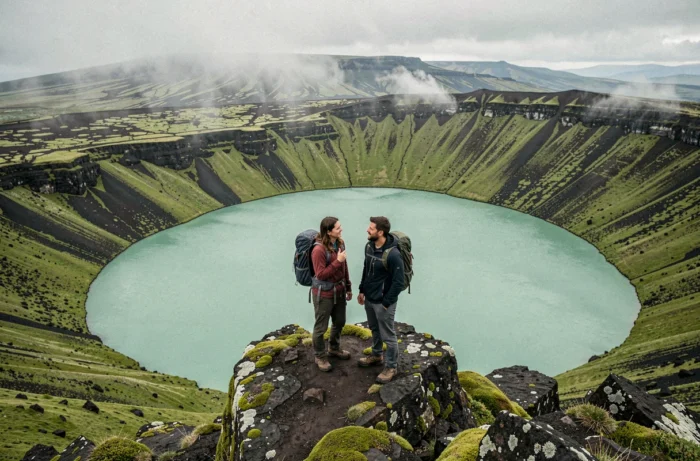
Fragile ecosystems impose temporary closures to regenerate. The case of Maya Bay has set a precedent. Other sites apply similar logic, with closure periods sometimes announced late, depending on the state of the natural environment observed by local authorities.
This rotational management changes the way to plan an unusual trip. A national park accessible in April may be closed in May. A trail open one year may not be the next if ecological conditions require it.
For travelers accustomed to classic destinations, this operation is disorienting. For those seeking a preserved nature experience, the closure of a site is the best indicator of its ecological quality. A place that closes to protect its ecosystem remains a place worth visiting, provided one adapts to its schedule.
Islands and isolated territories: between disorientation and transport constraints
Islands are among the most surprising destinations in the world, but their geographical isolation creates constraints that travel articles treat superficially. The Cook Islands, for example, offer a Polynesian setting without the crowds of Bora Bora, but air connections remain limited in frequency and capacity.
Greenland attracts for its Arctic landscapes and fjords. The logistical reality includes domestic flights on small aircraft, very limited accommodations, and weather that can ground flights for several days.
- Favor local companies that understand weather constraints and adjust schedules in real-time
- Book accommodations well in advance: on some islands, total capacity is counted in dozens of rooms
- Anticipate additional costs related to local supplies (food, fuel, equipment), which are significantly higher than continental rates
Isolation is the price of disorientation, and this price is measured in both time flexibility and budget. A traveler who struggles with logistical uncertainty will find these destinations frustrating rather than surprising.

The surprising destinations to visit around the world are not limited to a list of photogenic places. They are defined by their access constraints, their visiting windows, and the level of autonomy they require. A site regulated by quotas or closed for part of the year is often better preserved than a site that is open year-round. Choosing a destination based on these parameters means traveling with informed awareness.