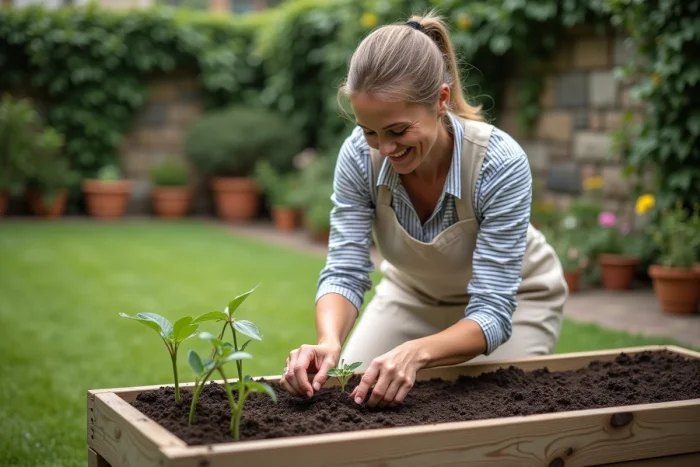
Creating a garden at home rarely starts with the choice of flowers. The most successful landscaping projects share a common point: they begin with a methodical reading of the land, long before thinking about plants or furniture. Comparing current approaches allows us to identify what distinguishes a sustainable green space from a garden that requires maintenance as early as the second season.
Soil, exposure, and use: three variables that condition the entire garden project
Recent professional content, such as that from Cade Paysage, places the reading of the land as the first step. The nature of the soil (clay, sandy, limestone), sun exposure, and the slope of the land determine both viable plants and possible covering materials.
However, the majority of popular guides start with aesthetics: Japanese style, romantic, Mediterranean. This early choice often leads to inconsistencies between the desired style and the real constraints of the land.
| Approach | Starting Point | Main Risk |
|---|---|---|
| General public (inspiration) | Visual style or decorative theme | Plants unsuitable for the soil or climate |
| Professional landscaper | Analysis of the land and uses | Higher initial diagnostic cost |
| 3D simulation (Planner 5D, etc.) | Digital modeling before work | Discrepancy between virtual rendering and actual soil |
The 3D simulation approach is gaining ground. Tools like Planner 5D allow for testing multiple configurations before planting anything. However, simulation does not replace a physical soil test, which remains the only reliable way to know the pH and drainage capacity.
Specialized resources on planetegarden.fr gather technical guides on plants and layouts suitable for each type of land, facilitating this preparatory phase.
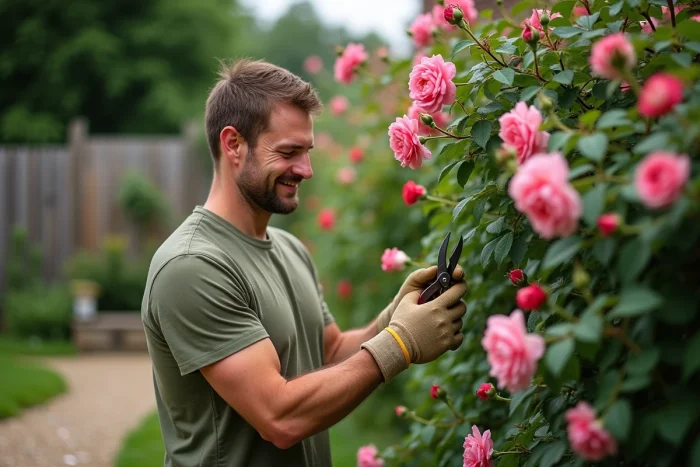
Structuring outdoor living spaces: what the layout changes concretely
A functional garden relies on the definition of distinct usage zones: dining area, relaxation corner, play zone, vegetable garden. Mapping out these zones before choosing plants prevents ending up with a bed that blocks circulation or a poorly oriented terrace.
Circulation and pathways
Paths are not just a decorative element. They structure daily movement between the house, the gate, and the different zones. Curved lines visually enlarge a small space, while straight paths are better suited for long, narrow gardens.
The choice of path material directly depends on the soil. Clayey ground that retains water poorly supports slabs laid on sand: frost lifts them in winter. A draining soil allows for lighter materials like stabilized gravel or stepping stones.
Volumes and relief
Playing with heights transforms a flat terrain into a lively space. Low hedges define without enclosing. Upright shrubs create focal points. Conversely, a garden where all plants peak at the same height produces a monotonous effect that neither flowers nor furniture can correct.
Choosing plants suited to the climate and soil: the criteria that matter
The common reflex is to choose plants for their flowering. Professionals think differently: resistance to local soil takes precedence over appearance. A plant suited to the terrain requires less watering, less fertilizer, and is more resistant to pests.
- Check the nature of the soil (simple test with white vinegar to estimate limestone, texture test by rolling between fingers) before selecting species
- Favor native or acclimatized plants to the geographical area, which require less maintenance and promote local biodiversity
- Group plants by identical water needs to avoid over-watered areas next to dry zones
- Plan for the adult size of each shrub or tree to anticipate space conflicts in five or ten years
The article from Côté Maison published in April 2025 emphasizes that sustainable gardens rely on robust plants and a logic of minimal maintenance. The concept of a “no-effort” garden does not mean the absence of work, but an initial choice that reduces future interventions.
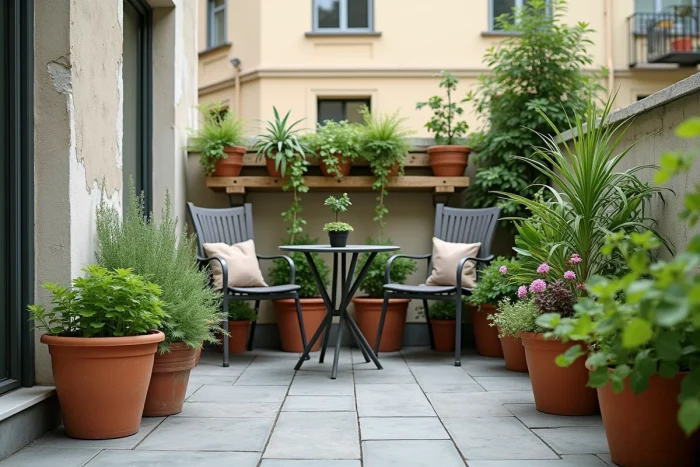
Reduced garden maintenance: mulching, ground covers, and soil biodiversity
Reducing maintenance starts with the soil, not the plants. Organic mulching (wood chips, dead leaves, straw) limits the growth of weeds, maintains moisture, and gradually nourishes the soil as it decomposes.
Persistent ground covers like creeping thyme or periwinkle offer an alternative to grass in lightly trafficked areas. Less mowing also means more pollinators, as tall grasses and wildflowers provide resources for insects.
- Mulching significantly reduces watering frequency, especially in summer
- A living soil (earthworms, microorganisms) naturally improves the structure of the terrain without chemical intervention
- Leaving an unmowed strip around the garden creates a biodiversity corridor without harming the overall aesthetics
This reasoning aligns with an underlying trend: to design the garden as an ecosystem rather than as a decor. Plants protect each other, the soil regenerates, and the time spent on maintenance decreases season after season.
A garden that functions well after three years requires less work than at the time of its creation. The key lies in the decisions made before the first planting: analyzing the land, structuring the spaces, and then selecting plants consistent with the soil and local climate.