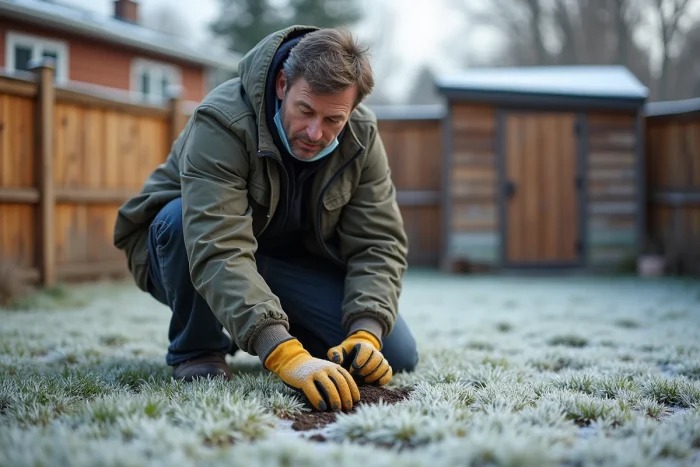
Planting grass seeds while the thermometer hovers around zero is not a gamble. But it is a serious risk of seeing your efforts go to waste. Some varieties withstand the cold without flinching, while others do not forgive the slightest icy misstep. A lawn sown too early or too late, poorly protected, quickly finds itself at the mercy of frost and its whims.
Frost, an underestimated risk for grass seeds
A frost can jeopardize an entire well-planned sowing. In the face of low temperatures, few seeds emerge unscathed: poor germination, reduced vigor, and sometimes complete disappearance after several cold nights. Sowing carelessly, without protection, is to open wide the door to the whims of the climate. Keep an eye on the weather and remember this rule: below 10°C in the soil, there’s no rush. Often, you have to wait until mid-March to bring out the seed packets.
| Frost-related risks | Consequences for seeds |
|---|---|
| Slowed germination | Uneven emergence, sparse lawn |
| Physical damage | Loss of germination capacity |
| Prolonged frost | Death of seeds |
Some methods truly make a difference in preserving your sowing during unexpected cold spells:
- Winter covers insulate your seeds down to -4 °C, protecting not only against sudden cold but also against curious birds or an unexpected last snowfall.
- Mulch creates a more temperate microclimate near the soil; it limits the impact of night frosts and improves recovery in spring, especially if combined with protective covers.
Staying alert to signs of cold is crucial. As many experts remind us, grass seeds and frost do not mix well. An excess of cold leaves scars on the lawn: sparse areas, persistent slow growth, and an increase in invasive grasses. There’s no need to rush in blindly: check the soil temperature, let a questionable cold spell pass rather than redo the entire operation later.
How to react if your sowing has been exposed to the cold?
When frost arrives after sowing has begun, there is room for maneuver, provided you react quickly. Watch for signs: yellowing or discolored shoots, weakened stems, and bare patches indicate thermal shock or compromised germination. Compacted, hard, and crusted soil also hinders recovery.
Start by gently aerating the surface with a rake: this operation gives a chance to young shoots that may have survived under the crust formed by the cold. Adjust your watering: aim for a light application, just enough to moisten without saturating the soil. Too much water at this stage, and the roots lack air and wither.
Consider adding protection to vulnerable areas. An emergency cover or an organic mulch application retains some warmth, limiting extreme variations. If the weather improves, many seeds may bounce back, but some areas may remain desperately empty.
As soon as the soil warms up, it is possible to fill in sparse areas. Choose seeds that are suitable for the season and the light conditions of your plot. Well-prepared soil, free of stones and enriched, greatly aids in the recovery of the lawn in the beautiful season.

Ideal timing and tips for successful sowing after winter
Everything hinges on the sowing window: wait for the soil thermometer to settle above 10 °C, typically between March and May depending on the region. There’s no point in rushing; soil that is too cold would ruin your efforts. The ground must be worked, dried out, never waterlogged or too dry. This intimate contact between seed and soil conditions a good emergence.
Put all the odds in your favor before opening the seed packet: carefully till the soil, remove roots, stones, and old debris, then level perfectly. Plan for significant weeding; any competing plant could smother the young blades. Adding mature compost or natural amendments enriches the soil and promotes a more uniform emergence.
Take the time to select the right seed variety. Shady soil or full sun? Dry or wet ground? Match your seeds to the specifics of your garden. For even distribution, sow by crossing your passes, then gently compact using a light roller or the back of the rake. This step optimizes seed adherence to the soil.
When it comes to watering, prefer moderate and regular applications: a fine rain, evenly distributed, helps germination, but do not water if cold nights are forecast (below 3 °C). Too much moisture in cool weather exacerbates damage to fragile shoots. Once emergence is achieved, aerate and scarify the soil to stimulate oxygenation, strengthen lawn density, and limit moss or disease.
Building a vigorous green carpet is neither a miracle nor a simple stroke of luck. It requires method and patience: watching the weather, preparing the soil, monitoring the whims of frost. In spring, each blade of grass reveals the success of a series of precise actions, the true reward for the attentive gardener.