
When looking to keep a three-year-old entertained without screens, the box of animal figurines comes out of the closet before the markers. This reflex shared by many families says something about the place of miniature animals in daily life: they are used for play, but also for naming, sorting, and storytelling. The figurine market has structured itself around this dual function, between free play and learning support.
Miniature animal figurines in therapy: a use not shown in the toy aisle
We rarely think of speech therapy or psychomotor therapy offices when talking about figurines. However, miniature animals have been used in therapeutic care since the mid-2010s, in France as well as in Canada. In child psychiatry, a tray of animal figurines allows the child to project their emotions onto a non-human character, which facilitates verbalization.
In speech therapy, they are used to work on narration: the child builds a scene with the figurines and then tells the story. The therapist can guide the vocabulary (species names, habitats, actions) without imposing a formal exercise. The physical manipulation of the figurine anchors the word in a gesture, which aids memorization.
This therapeutic diversion has practical consequences on the choice of pieces. Professionals prefer figurines with sufficient anatomical realism for a child to distinguish a fox from a wolf, but small enough to fit in a child’s hand.
Collections oriented towards “local wildlife” (roe deer, badger, heron) work better in this context than exotic animals, because the child can relate the figurine to a lived experience. To discover Les Animaux de la Fée, one comes across a selection that meets this need for variety and fidelity to life.
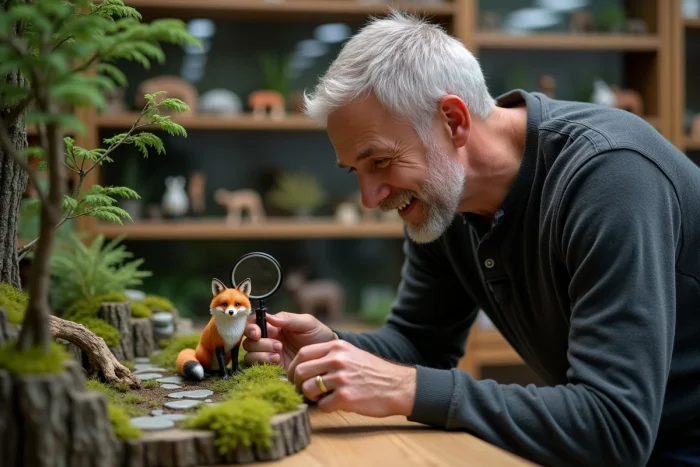
EN 71 safety standards: what figurines for under three years must comply with
The revision of European standards EN 71-1 and EN 71-3, applied more stringently in the EU in the early 2020s, has concretely changed the manufacturing of figurines intended for toddlers. Two control points have been tightened: the risk of ingestion (minimum size of pieces) and the migration of heavy metals contained in paints.
Some manufacturers have had to reformulate their paints and plastics to remain compliant. Others have slightly increased the size of their smallest figurines to exceed the critical threshold of the ingestion test cylinder. Sometimes, product sheets indicate “suitable from 3 years” where the same range indicated “from 18 months” a few years earlier.
For a parent shopping online, reading the recommended age and the CE marking remains the most reliable filter. Feedback varies on the durability of paints depending on the brands, but EN 71 compliance guarantees at least the absence of toxic substances beyond regulatory thresholds.
Points to check before purchasing for a child under three years
- The CE marking and the explicit mention of the EN 71 standard on the packaging or product sheet, not just in the marketing description
- The absence of small removable parts (tail, horn, appendage) that could detach after a few manipulations
- The texture of the paint: a figurine whose color layer chips off when scratched poses a real risk of ingesting fragments
Figurines of endangered species and local wildlife: the collection as a tool for awareness
Since 2020, the demand for miniature animals representing endangered species or local wildlife has significantly increased. Schleich and Papo, in their recent catalogs, offer “wild animals” and “protected species” collections designed to raise children’s awareness of biodiversity. Some of these ranges include an educational booklet or a QR code linking to educational content.
This positioning is not just a sales argument. In a kindergarten class, a bin containing a lynx, a bearded vulture, and a spotted salamander opens up a whole different narrative register than a standard lion-elephant-giraffe set. The child discovers that remarkable animals live near them, not just in the savanna.

Artisans and small publishers of hand-painted figurines
A growing segment largely ignored by large retailers: hand-painted artisan figurines. These pieces, often produced in small batches, target adult collectors as well as families. Their price is higher, but the quality of sculpture and anatomical precision surpass what is found in industrial production.
They can be found in specialized online shops and at craft markets. The interest for collectors lies in the rarity of the models and the fidelity of the animal postures, sometimes validated by naturalists.
Concrete criteria for choosing a durable animal figurine
Between two deer figurines at the same price, the difference lies in details that the photo does not always show. Here are the operational criteria that make a difference in use:
- Stability on a flat surface: a figurine that falls with every manipulation ends up at the bottom of the bin. Flat bases or slightly spread legs are a good indicator
- The level of detail in the eyes and fur: this is what allows a child to spontaneously name the species without help
- Scale compatibility with the rest of the collection: a horse twice the size of an elephant disrupts the play scene
- The material (soft PVC, resin, rigid plastic): soft PVC withstands falls better but accumulates bite marks from toddlers
The choice between industrial figurine and artisan piece depends on the use. For a child who plays on the floor every day, robustness is paramount. For a display case or an educational project in class, anatomical realism and species diversity matter more. In both cases, we return to the same starting point: a good animal figurine is one that you want to hold in your hand, not just look at.